
Open Settings > System > About and confirm the edition, version and OS build before trying to move past Windows 11 23H2. Then check Settings > Windows Update: a missing feature-update offer needs eligibility, policy and safeguard checks; an update that starts and fails needs its error code. Don't clear the TPM or bypass compatibility checks just because Windows says you're up to date.
I'd make that distinction before downloading anything. “Stuck on 23H2” can describe a perfectly usable desktop with no upgrade offer, a Setup compatibility rejection, or an installation that rolls back. Those are different problems.
Confirm what is keeping the PC on 23H2
Under Windows specifications in About, copy the edition, version and OS build. Under Device specifications, note the system type, including whether the processor is x64 or Arm-based. Keep your serial number, device ID and product ID out of public screenshots.
- No newer version appears: check whether updates are paused, the PC is managed, or Windows shows a compatibility or safeguard message.
- Setup says the PC doesn't meet requirements: save the exact failed requirement. Already running 23H2 doesn't establish eligibility for a later release.
- A version downloads but fails: open Windows Update > Update history and record the feature-update name, error code and failure stage.
- An installation is still progressing: keep power connected. Use the dedicated 100% update checks or Installation Assistant checks rather than treating an active installation as a missing offer.
- A work deployment hangs at “Just a moment”: give the deployment administrator the task-sequence stage and image details. That is separate from a personal PC staying on an older version.
23H2 is now past its update deadline
Microsoft's 23H2 release-status page says Home and Pro reached end of updates in November 2025, and Enterprise and Education in November 2026. The November 2026 security update is the last for those Enterprise and Education editions. Those dates apply to the named editions; check the lifecycle for a different specialized edition.
The same page recommends Windows 11 26H2 for eligible devices. The current Windows 11 download page also identifies 26H2 as its current release. A download advertised as “latest Windows 11” therefore isn't a way to select 24H2 or 25H2 specifically.
I'd plan a move to a supported, compatible release instead of spending time forcing an old target. On an organization-owned device, IT needs to choose that target and deployment route. An expired release needs a migration plan even if the desktop still works.
If Windows Update offers nothing newer
- Save your work. In Settings > Windows Update, resume paused updates if that control is available and you own the decision.
- Select Check for updates. Install applicable updates offered for the installed system, complete a requested restart, then check again.
- Read the whole Windows Update message. If it offers Learn more about compatibility or readiness, open that explanation and save the named issue.
- Look for organization-management notices. Ask IT to check the assigned feature-update target, deployment group, pause or deferral, and update source before changing anything.
Microsoft's safeguard-hold explanation describes why a known problem can temporarily prevent an offer. A hold is a compatibility precaution, so don't treat the missing offer as proof that the download cache is damaged. Release health lists broadly disclosed issues; it doesn't expose every third-party hold.
Management can also determine what is offered. Microsoft's feature-update policy guidance explains target versions, pauses and deferrals. An invalid target value can prevent feature-update offers. A “managed by your organization” notice doesn't tell you which setting is responsible; don't delete policy registry keys to make the notice disappear.
The Get the latest updates as soon as they're available switch isn't a compatibility override. Repeatedly toggling it won't resolve a named hold or an incorrect deployment assignment.
If eligibility checks disagree
Write down both results: what PC Health Check reports and the exact message from the upgrade tool. A general compatibility pass doesn't identify a release-specific hold, while a rejection needs the named requirement investigated. Check the PC maker's support page for your exact model, its supported Windows releases, firmware and drivers.
The Windows 11 requirements include a compatible processor, UEFI with Secure Boot capability and TPM 2.0. Having enough RAM or a recent graphics card doesn't establish that every requirement is met. Use the manufacturer's instructions for a firmware setting; don't switch storage modes or toggle security settings at random.
Before any firmware or security change, back up important files and make sure you can retrieve the device's BitLocker recovery key if its drive is encrypted. Keep that key private. If the device belongs to work or school, ask IT to handle the change.
A useful example is the Ars discussion about a PC remaining on 23H2: the owner saw TPM enabled in firmware, but Windows tools couldn't detect it. Firmware and chipset updates didn't resolve that case. The owner later reported that clearing the TPM restored detection and that an ISO upgrade reached 25H2. The important diagnostic detail is the detection mismatch; the outcome doesn't make clearing safe for every PC.
I wouldn't clear the TPM as a general 23H2 fix. Microsoft's TPM troubleshooting precautions warn that clearing it loses associated keys and can cause data loss. A forum report in which clearing helped one PC doesn't establish that your PC has the same fault.
Choose a supported upgrade route
If Windows Update offers a compatible feature update, select Download and install and follow its prompts. Keep the PC powered and verify the resulting version afterward.
If no offer appears, identify the reason first. Check the intended release's current known issues through Windows release health, including any issue that matches your hardware, driver or application. When the device is eligible, no applicable hold remains and the upgrade is approved for that PC, Microsoft's download page provides the Installation Assistant and installation media. The Assistant is for x64 PCs, not Arm-based PCs, needs an administrator and requires at least 9 GB free for its download. That download allowance isn't a promise that Setup will need no more space.
For an in-place upgrade using an official ISO, match the media to the device's architecture, installed language and licensed edition. Confirm the release named on the download page before you begin. Back up files, then use Microsoft's in-place installation procedure:
- Stay signed in to the existing Windows desktop. Right-click the downloaded ISO and choose Mount.
- Open the mounted drive and run setup.exe. Approve the administrator prompt and review Setup's compatibility messages.
- At the keep-options stage, choose Change what to keep > Keep personal files and apps if preserving the existing installation is your goal.
- Check the target edition and what will be kept before selecting Install. If keeping apps is unavailable, cancel and investigate the media and compatibility mismatch. Don't proceed with Keep nothing as a workaround.
Booting from a USB to perform a clean installation follows a different path and removes files, apps and settings. You don't need that destructive route simply because Windows Update hasn't offered a newer version. Let the supported in-place process finish; it can restart several times.
Don't apply KB5054156 to jump straight from 23H2 to 25H2. Microsoft's 25H2 enablement-package prerequisites require Windows 11 24H2 with KB5064081 or a later cumulative update. An enablement package isn't a universal upgrade installer.
If the upgrade starts and fails
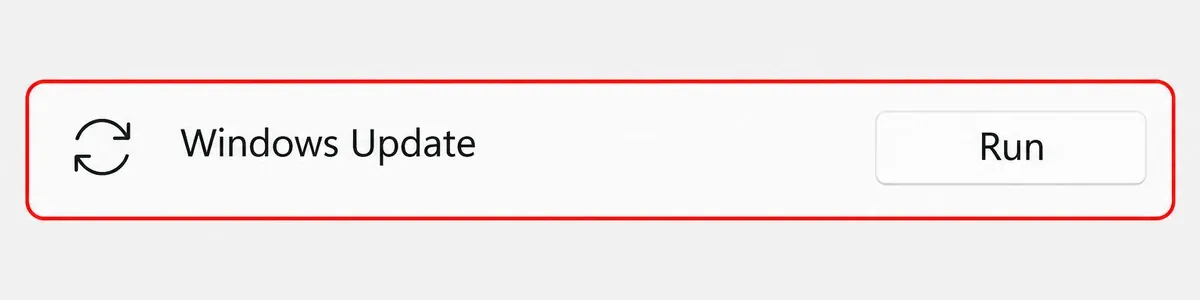
Save the target version, exact code, approximate failure time and whether failure happens during download, before restart or during rollback. Once you're back at the desktop, run Settings > System > Troubleshoot > Other troubleshooters > Windows Update > Run and follow the Get Help prompts in Microsoft's update troubleshooting steps. Keep the diagnostic result.
Use the Windows 11 update-failure guide to choose a repair from the code and stage. For a failed target specifically named 24H2 or 25H2, follow the 24H2 installation checks or 25H2 prerequisites and failure checks. If the machine repeatedly rolls back and can't boot, use the undoing-changes recovery route.
If an attempted installation returns 0x8024A217 and restores the previous version, use the SetupDiag and rollback-log checks for 0x8024A217 before retrying. That is a failed installation, a different stage from receiving no newer-version offer.
After a failed feature upgrade, preserve Setup's logs before cleanup or another attempt. SetupDiag can identify the failed phase and rule; a log result is more useful to support than a screenshot saying only “23H2.” Ask support to examine that result if the named cause remains unclear.
Verify the upgrade, or hand off the evidence
After the final restart, return to Settings > System > About. Confirm that Version changed to the intended release, then check Windows Update for applicable updates. Check that your important files and everyday applications are available. A finished download or a successful monthly KB alone doesn't prove the feature upgrade completed.
If the PC stays on 23H2, give the manufacturer, Microsoft Support or IT the edition and build, system type, intended target, exact offer or rejection text, update-history code, diagnostic result and relevant Setup logs. Remove account identifiers and recovery keys from anything shared publicly. That evidence lets the next person distinguish a deployment choice, a compatibility block and an installation failure.
For other update symptoms, start from the Windows Update troubleshooting hub.



